What Affects the Performance of Pleated Cartridges in Pulse-Jet Dust Collection Systems
"This article explains how pleat geometry, cleaning mode, tank pressure, and surface treatment affect the performance of pleated filter cartridges in pulse-jet dust collectors"
By Snehil Lohia |
19 January 2026
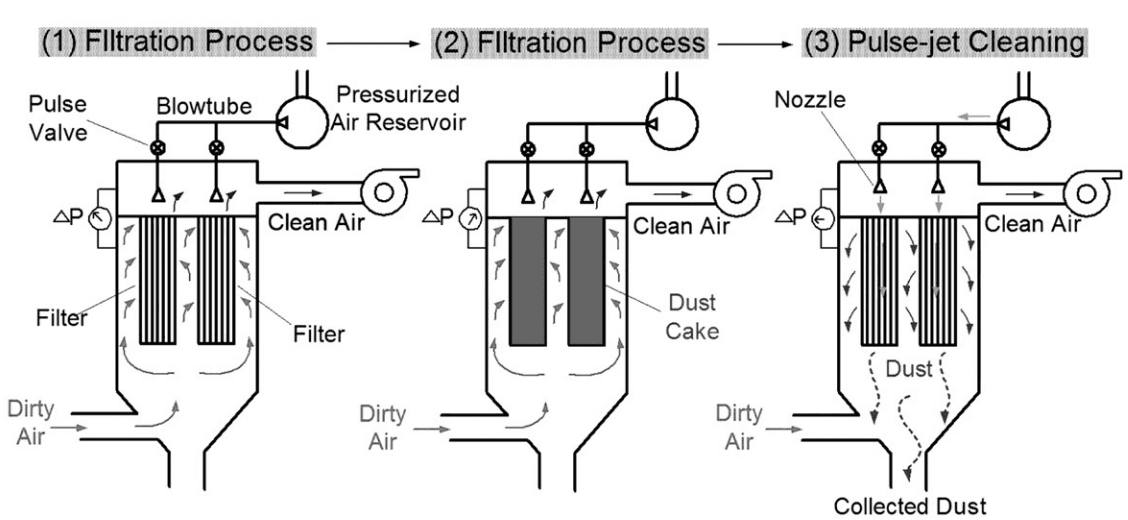
Pleated fabric cartridge filters are increasingly used in modern pulse-jet dust collectors due to their compact design and higher filtration surface area compared to traditional flat filter bags. However, their cleaning behaviour, pressure drop stability, and particle emissions during pulse cleaning differ significantly from conventional baghouse filters.
A detailed experimental study published in Powder Technology investigated how pleat geometry, cleaning mode, tank pressure, and surface treatment affect the performance of pleated filter cartridges in pulse-jet dust collectors
This article breaks down the practical engineering insights from that study and explains what they mean for dust collector design, operation, and filter selection.
How Pulse-Jet Cleaning Works in Pleated Filters
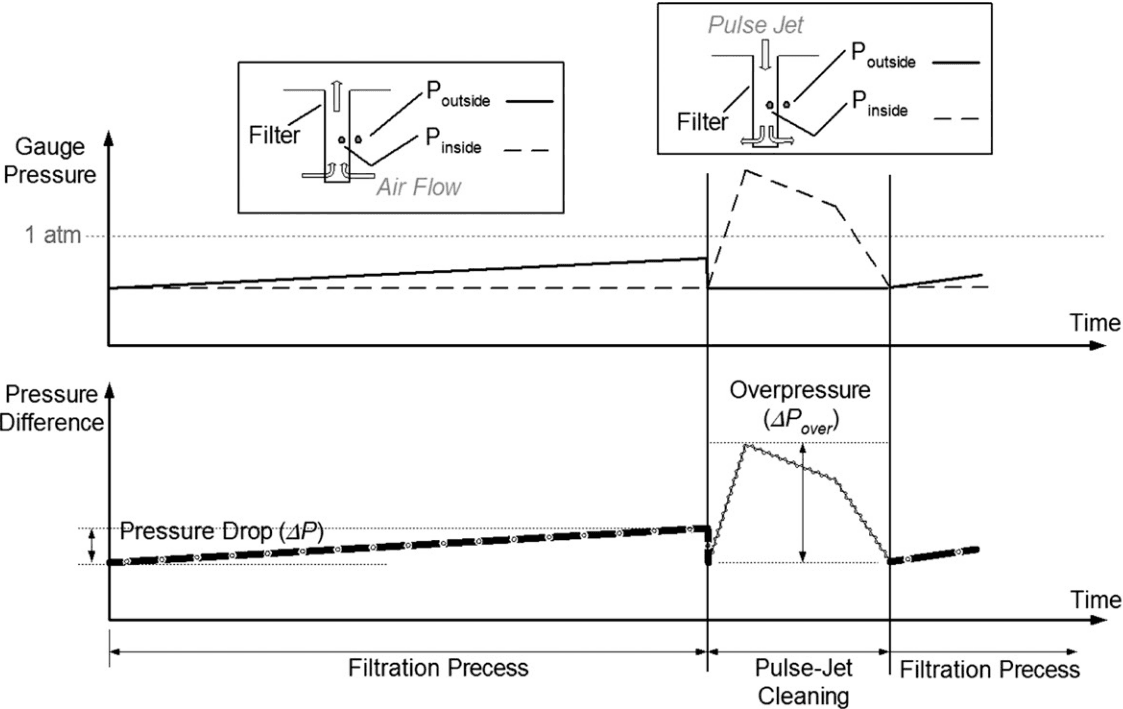
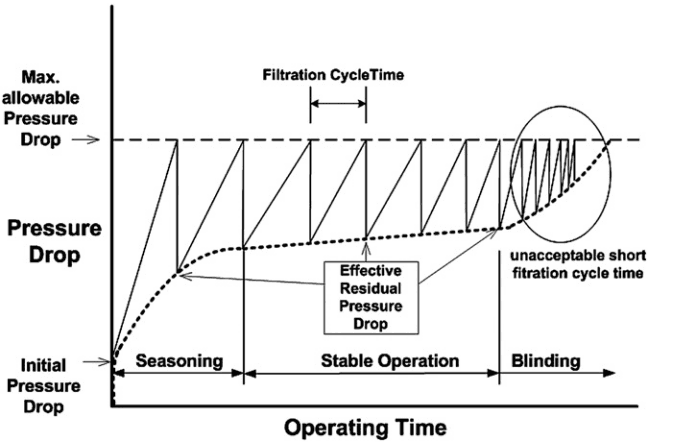
In a pulse-jet dust collector, compressed air is released in short bursts to dislodge the dust cake from the filter surface. The cleaning effectiveness depends on the overpressure generated inside the filter, which is the difference between:
- The pulse air pressure
- The operating pressure drop across the filter at the time of cleaning
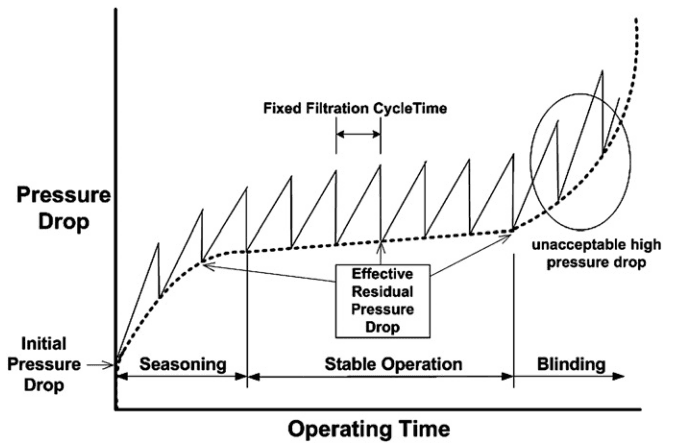
If this overpressure is insufficient, dust is not removed effectively, leading to rapid pressure drop increase and early filter blinding.
Clean-on-Demand vs Clean-on-Time Cleaning Modes
The study evaluated two commonly used cleaning strategies:
Clean-on-Demand
- Filters are cleaned only when pressure drop reaches a preset limit
- Allows longer filtration cycles
- Reduces unnecessary pulsing
Clean-on-Time
- Filters are cleaned at fixed time intervals
- Independent of actual pressure drop
- Often used in cartridge-based systems
Why Pleat Ratio Is Critical
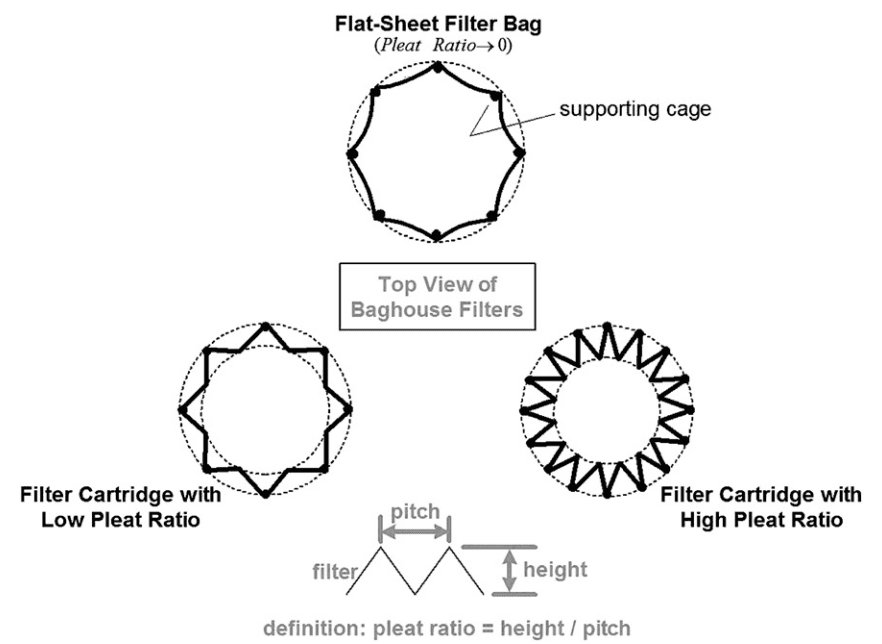
- Low pleat ratio → wider pleats, more open geometry
- High pleat ratio → tight pleats, higher surface area
Findings from the Study
| Pleat Ratio | Preferred Cleaning Mode |
|---|---|
| Below ~4.0 | Clean-on-Demand |
| Above ~4.0 | Clean-on-Time |
This happens because airflow distribution and pressure propagation during pulsing change with pleat geometry. High-pleat-ratio cartridges benefit from more frequent, controlled cleaning to avoid dust buildup deep inside pleats.
Effect of Tank Pressure and Pulse Duration
Tank Pressure (Most Important Factor)
A critical minimum tank pressure is required for effective cleaning. Below this pressure:
- Dust cake is not released
- Longer pulse duration does not help
- Filter blinding occurs faster
Pulse Duration (Secondary Role)
- Longer pulses can help only if tank pressure is already sufficient
- Extending pulse time at low pressure increases dust redeposition
- Optimal pulse timing is more important than simply increasing duration
Influence of Filter Media & Surface Treatment
The study compared cartridges with:
- Fine fiber surface treatment
- PTFE membrane
- No surface treatment
Observations:
- Fine fiber treated cartridges showed:
- Lower residual pressure drop
- Longer stable filtration cycles
- Lower particle emissions during pulse cleaning
- Cartridges without surface treatment showed rapid blinding
- PTFE membrane did not consistently reduce particle penetration during cleaning
Practical Takeaway: Surface-treated pleated filters generally perform better in pulse-jet dust collectors, especially for fine dust applications.
Particle Emissions During Pulse-Jet Cleaning
One important but often overlooked finding:
- Particle emissions increase sharply during pulse cleaning
- Downstream particle concentration during pulsing was at least 2× higher than during normal filtration
- Emission spikes were:
- Independent of cleaning mode
- Independent of pulse intensity
- Only slightly influenced by pleat ratio
This highlights why secondary containment and system sealing are important in cartridge dust collectors.
What This Means for Dust Collector Design
From an engineering and procurement perspective:
- Pleated cartridge filters are not “drop-in replacements” for fabric bags
- Cleaning strategy must match:
- Pleat geometry
- Media type
- Application dust characteristics
- Improper cleaning mode selection leads to:
- High pressure drop
- Short filter life
- Unstable emissions
This is especially relevant when selecting pleated dust collector bags for compact or high-efficiency systems
Conclusion
This experimental study confirms that pleated fabric cartridges behave fundamentally differently from flat filter bags in pulse-jet dust collectors. The most important factors influencing performance are:
- Tank pressure (must exceed a critical value)
- Pleat ratio (determines ideal cleaning mode)
- Surface treatment (fine fiber shows clear benefits)
- Cleaning timing, not just cleaning intensity
Understanding these factors helps plant engineers and filtration specialists extend filter life, reduce downtime, and maintain emission compliance.